
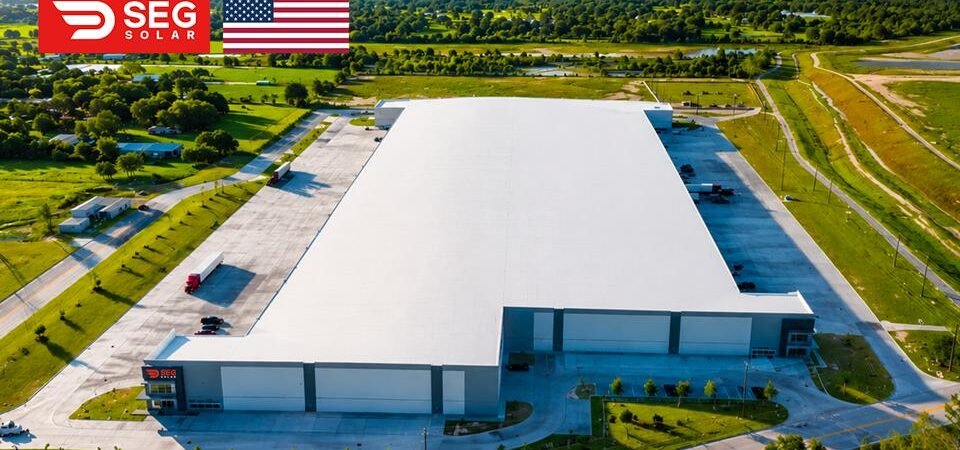
A major new chapter in Texas solar manufacturing is already taking shape on a Tomball factory floor. The SEG Solar Tomball operation has begun commercial-scale production of advanced HJT solar modules, just weeks after celebrating the opening of a manufacturing expansion representing more than $200 million in investment.
The company announced its first HJT module on September 15, 2026. Now, a new state filing documents interior work spanning 425,360 square feet at the recently opened Tomball #1 facility. That paperwork offers another glimpse into a much larger manufacturing story already underway in Tomball.
The plant adds approximately 4 gigawatts of annual solar-module manufacturing capacity to SEG’s U.S. footprint. It also places the Tomball area at the center of the company’s rapid push to make more solar equipment domestically.
SEG Solar Tomball reaches a production milestone
In its September production announcement, SEG said the first heterojunction, or HJT, module had rolled off the Tomball #1 line. The company described the milestone as the start of commercial-scale HJT module production at its second U.S. factory.
That distinction matters. An opening ceremony introduces a facility to the community; a production milestone shows its manufacturing systems beginning to deliver finished products. Tomball #1 has now reached both stages.
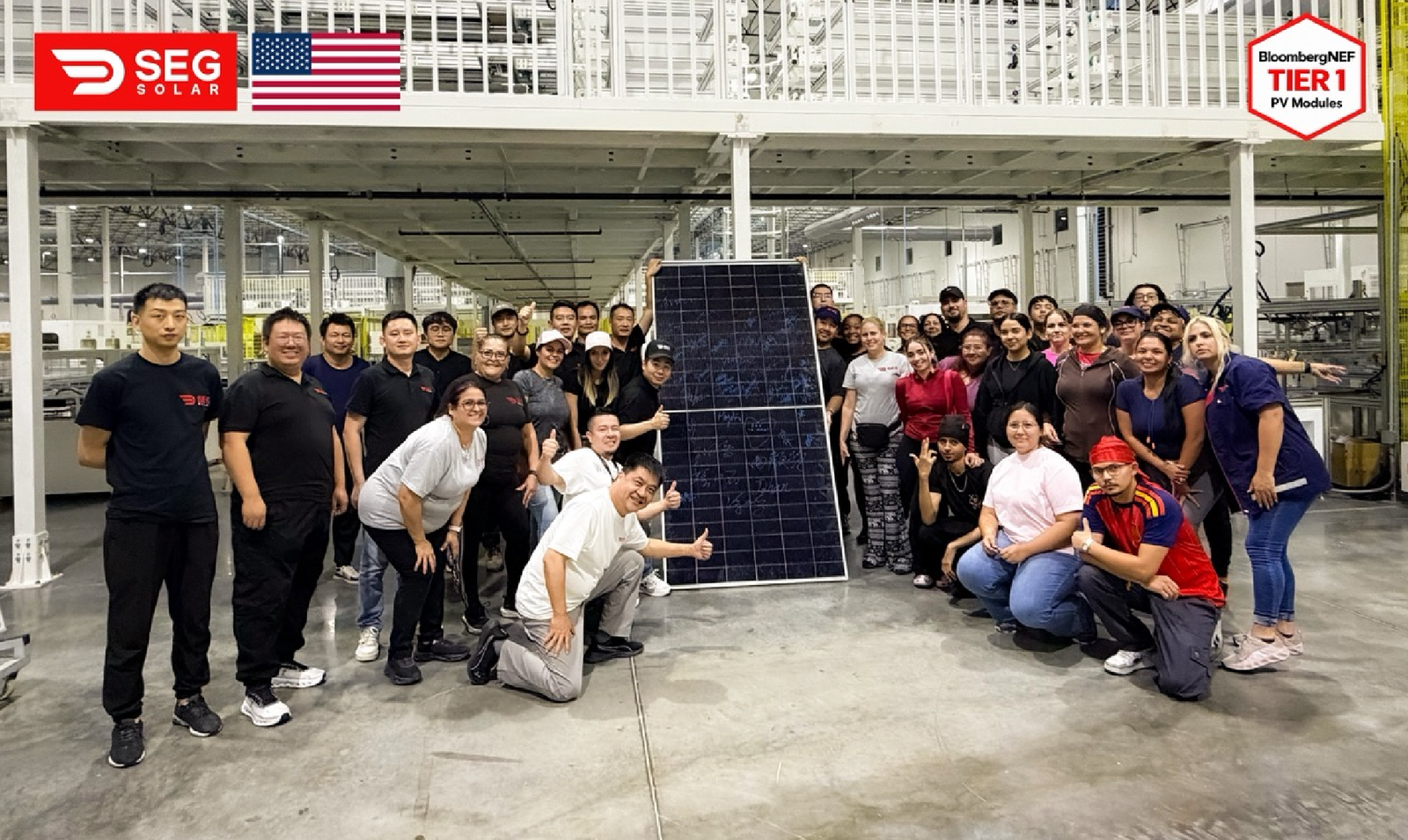
HJT is a solar-cell technology designed to capture sunlight efficiently. SEG says it offers higher bifaciality—better use of light reaching the rear of a two-sided module—along with better performance in heat and less output loss over time. Those advantages can increase lifetime energy production compared with conventional photovoltaic technology, according to the company.
For customers, the goal is straightforward: modules that keep producing more electricity throughout their working lives. For Tomball, the significance is that this newer technology is now part of the local manufacturing operation.
An August opening with hundreds in attendance
SEG inaugurated Tomball #1 on August 7, 2026. The company reported approximately 800 attendees, including employees, business partners, customers and representatives of government and industry organizations.
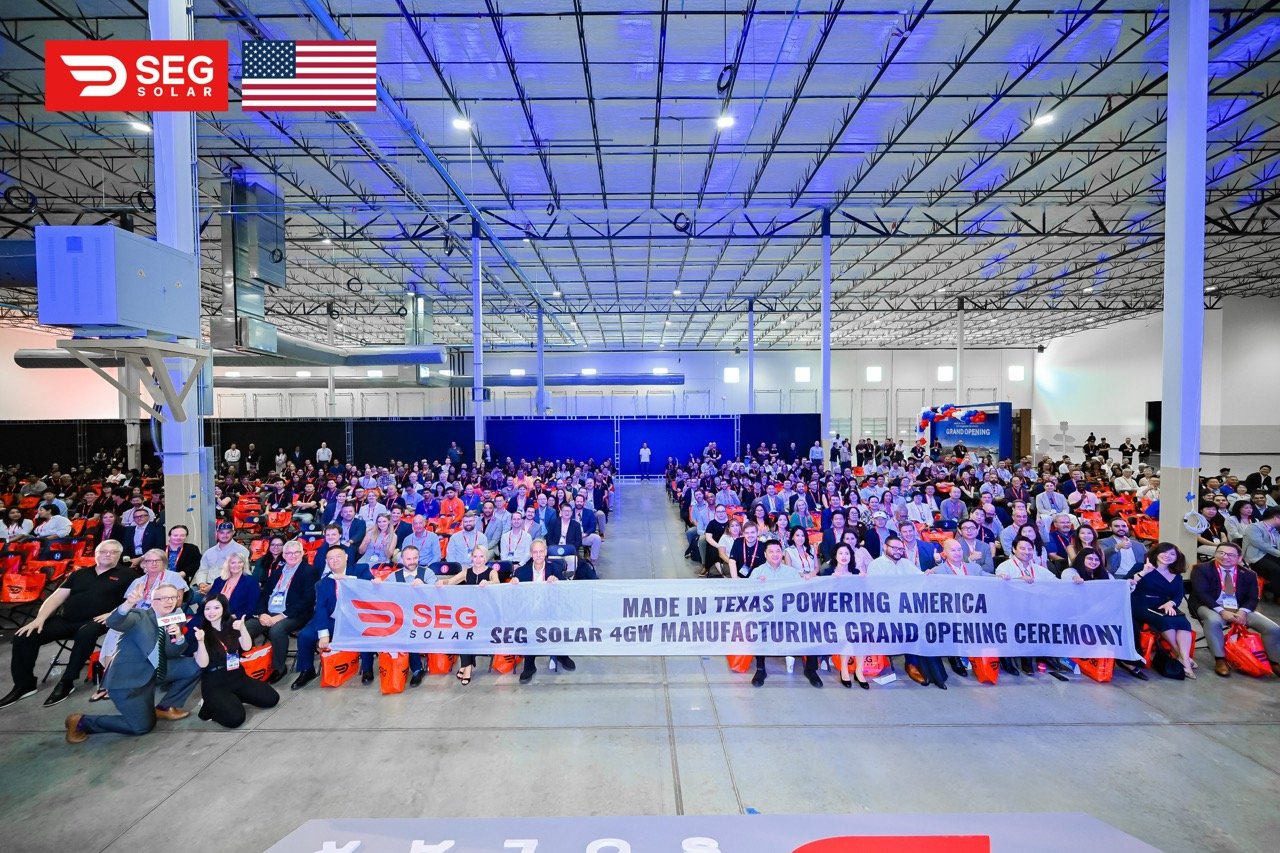
The facility covers more than 500,000 square feet and contains four advanced production lines. SEG identifies the operation with its latest-generation HJT modules, making the building a substantial addition to Greater Houston’s manufacturing base.
Its 4-GW figure measures annual module-manufacturing capacity: the combined rated power of the solar modules the factory can produce in a year. It is not a claim that the factory itself generates four gigawatts of electricity.
SEG’s May announcement placed the expansion’s investment above $200 million, while its inauguration release described an approximately $200 million facility. Both figures convey the scale of the overall manufacturing investment, which is far larger than the value listed in the new interior-buildout filing.
Inside the SEG Solar Tomball manufacturing operation
Behind the enormous roofline is a production system that SEG says combines advanced automation with digital manufacturing management. The company describes tools that coordinate orders, material movement and production work across the facility.
Automated scheduling helps organize production, while AI-enabled inspection supports quality checks. SEG says these systems also help track materials and products through the manufacturing process.
Together, those capabilities explain what makes this an advanced manufacturing operation. The investment involves the equipment and systems needed to turn components into finished solar modules, along with the building that houses that work.
The technology also gives the local story a human dimension. A factory’s output depends on workers operating within that production system, coordinating materials and maintaining quality as the lines run. SEG’s active recruiting offers a direct connection between the expansion and people seeking manufacturing work in the area.
Hiring is active, with up to 800 jobs initially projected
In its May 2026 expansion announcement, SEG initially projected that the Tomball expansion could create up to 800 jobs. That is a projection for the expansion, not a verified current employee count.
The company’s U.S. careers page currently lists production-worker opportunities and other positions associated with the Tomball operation. The openings support a clear local takeaway: hiring is active as the manufacturing business grows.
The two figures of 800 describe different things. One is the company’s initial potential job-creation estimate; the other is attendance at the August inauguration. Neither establishes how many people work at Tomball #1 today.
SEG Solar Tomball anchors a 10.6-GW expansion plan
Tomball #1 is the second major step in a broader U.S. factory expansion. SEG’s first Houston module plant opened in August 2024, with approximately 250,000 square feet, an investment of roughly $60 million and annual module capacity of approximately 2 GW.
Tomball #1 roughly doubles that original plant’s floor area and adds twice its annual module capacity. Together, the two factories give SEG approximately 6 GW of U.S. module-manufacturing capacity.
Meanwhile, Factory #3 in Greater Houston is under construction. The company describes approximately 1.15 million square feet of manufacturing and warehouse space, with planned annual capacity of 4.6 GW.
SEG targets construction completion for March 2027 and production for May 2027. Once that facility is operational, the company says its planned U.S. module-manufacturing capacity would reach approximately 10.6 GW annually. Those remain company targets, rather than completed capacity today.
A domestic supply-chain strategy beyond finished modules
The SEG Solar Tomball factory also fits into a longer-term effort to control more stages of solar manufacturing. SEG has discussed a domestic manufacturing chain extending through ingots and wafers, solar cells and finished modules, with U.S. cell production targeted for 2028.
In simple terms, those are successive steps from preparing the material used in solar cells to assembling the finished panels. Bringing more of that work into a connected manufacturing chain can give a company greater control over sourcing and production.
SEG has linked its expansion strategy to rising U.S. electricity demand, including demand from artificial intelligence and data-center development. That is the broader market backdrop; the company’s Tomball announcements do not establish that this factory’s modules are assigned to particular AI facilities.
Where the new interior-buildout filing fits
TDLR project TABS2027001652 lists 425,360 square feet of first-time interior buildout at 20103 Clay Industrial Road. SEG’s current facility directory also identifies that address for Tomball #1.
The filing carries a $1.5 million registered construction value and a registered schedule of June 15 through December 15, 2026. That value applies to the scope in this particular filing. It is not the total cost of the factory or the broader manufacturing expansion.
Likewise, the 425,360-square-foot filing scope is distinct from SEG’s description of a facility exceeding 500,000 square feet. The registered December completion date does not mean the entire operation is waiting to open: SEG celebrated the factory in August and announced commercial HJT production in September.
The SEG Solar Tomball investment is already delivering a new manufacturing presence. A $200 million-plus expansion has moved from an opening celebration to producing advanced solar modules, with hiring active and another major SEG factory advancing elsewhere in Greater Houston.