
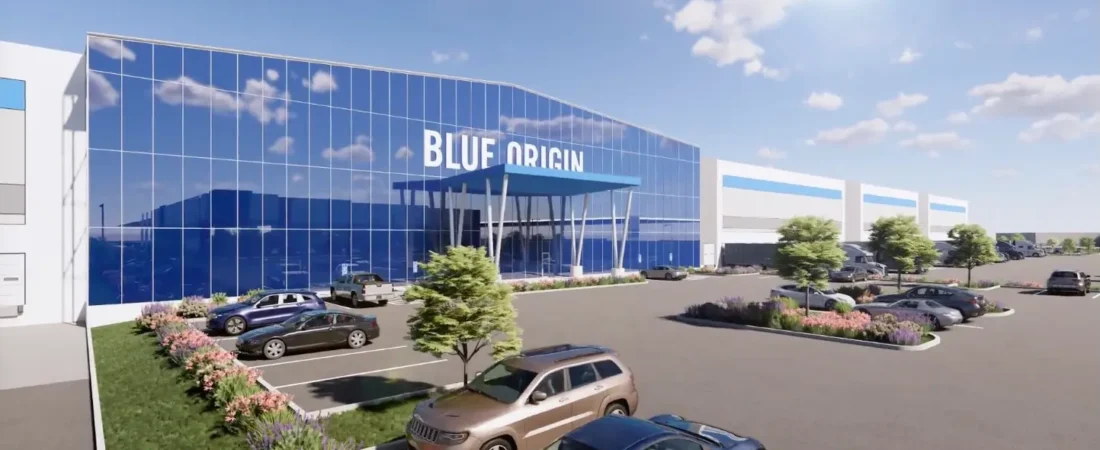
The Blue Origin Hutto announcement puts the city on a new aerospace manufacturing map. On October 8, 2026, Blue Origin selected Hutto for Constellation Park, a 1.3-million-square-foot campus spanning multiple facilities. The company projects more than 2,000 manufacturing and related jobs over the next decade.
Workers will help produce satellite systems, ground communications equipment and spacecraft components. The investment could give Hutto a major new source of technical careers as Blue Origin expands the infrastructure behind its space ambitions.
Williamson County previously described approximately $650 million in proposed investment. That estimate comes from the county’s earlier economic-development announcement, rather than a final spending total in the company’s October release.
Could Blue Origin become Hutto’s largest employer?
Blue Origin could become one of Hutto’s largest employers—and potentially its largest—as it builds toward the projected workforce. The scale is substantial, but hiring will unfold over years.
For context, Hutto’s 2021 principal-employer table ranked Hutto ISD first with 1,195 employees. The Texas Education Agency’s 2025–26 district profile now lists 1,439.2 full-time-equivalent staff.
Those measurements need care. Full-time equivalents measure staffing workload, not individual headcount, and the school district extends beyond city boundaries. The figures also compare existing school staffing with future company hiring. They show the project’s potential scale without establishing a guaranteed future ranking.
What will the Blue Origin Hutto campus manufacture?
Constellation Park’s announced production includes TeraWave satellite systems and Quartz ground communications equipment. Blue Origin also identifies solar arrays, avionics, telecommunications equipment and other satellite hardware.
These components perform different jobs. Solar arrays convert sunlight into electrical power. Avionics are the electronics that help control and monitor a spacecraft. Communications hardware carries commands and data between systems. Together, they help a satellite function after a rocket places it in orbit.
TeraWave: moving enormous amounts of data
TeraWave’s announced design calls for 5,408 satellites: 5,280 in low Earth orbit and 128 in medium Earth orbit. A constellation is a coordinated network of satellites. The two orbital layers operate at different distances from Earth.
Blue Origin is targeting enterprises, data centers and governments with large communications needs. The design combines radio connections with optical links, which use light to transmit information. The company describes optical connections reaching up to 6 terabits per second through the medium-orbit layer.
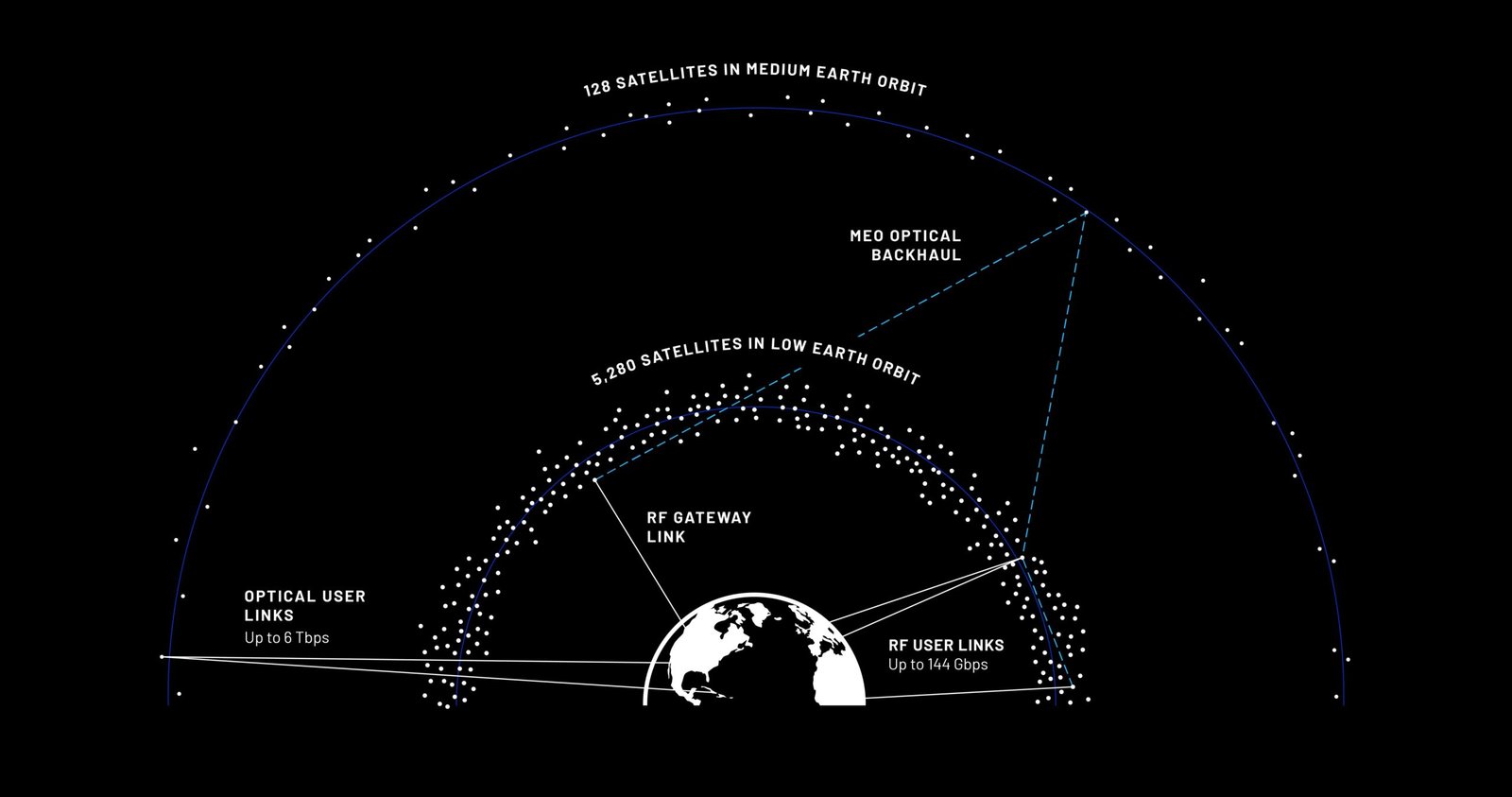
In practical terms, the network could connect remote industrial facilities, move data between major sites and provide additional routes when ground connections fail. Blue Origin’s program overview describes adding capacity where fiber is limited or unavailable. These are intended capabilities, not announced customer contracts.
Deployment is planned to begin in the fourth quarter of 2027. That is a constellation deployment target, not an opening date for the Blue Origin Hutto campus.
SpaceX’s Starlink already offers residential and business services, with priority plans also serving government users. TeraWave emphasizes high-capacity enterprise and government connections. Their markets overlap, but their customer strategies differ; TeraWave remains a planned network.
Quartz: keeping spacecraft connected to Earth
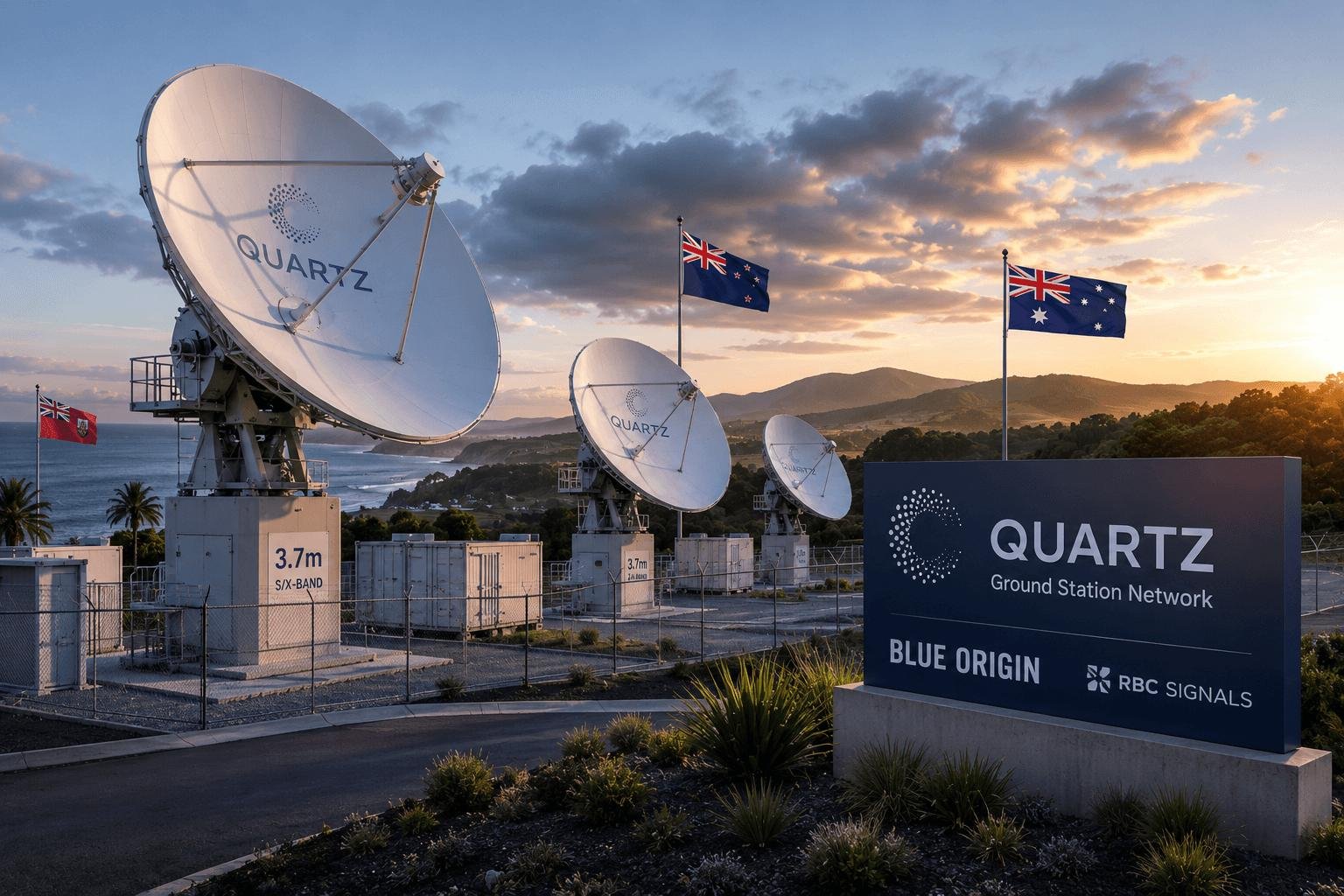
Quartz is a separate ground communications program. Its antennas and electronics let mission teams send commands, receive data and track spacecraft. Ground stations provide the Earth-side connection needed to operate systems in space.
In its August 13 rollout update, Blue Origin said it had installed and successfully tested the first three Quartz stations in Bermuda, New Zealand and Australia. The company planned nine sites by year-end, with RBC Signals supporting the initial rollout.
The first stations use 3.7-meter antennas and S-band and X-band radio frequencies for low-Earth-orbit missions. Those names identify portions of the radio spectrum. Hutto’s role is manufacturing Quartz-related equipment; the announcement does not identify Hutto as one of those overseas station locations.
How Hutto fits Blue Origin’s broader ambitions
Jeff Bezos founded Blue Origin in 2000. Its programs include New Shepard, a reusable rocket for suborbital flights; New Glenn, a large orbital launch vehicle; and Blue Moon lunar landers. Meanwhile, Blue Ring provides a spacecraft platform for transporting and hosting payloads and supplying in-space services.
The Blue Origin Hutto manufacturing plans add capacity for the communications and components those broader space activities require. The company has separately identified Huntsville, Alabama, as its Blue Ring production location. Its Hutto announcement does not assign lunar lander or Mars-mission hardware to Constellation Park.
In a statement included in the Hutto release, Governor Greg Abbott connected the expansion to Texas’ advanced-manufacturing and space industries.
The investment and public incentives
Williamson County announced approval of an economic-development agreement on August 20, 2026. The Commissioners Court agenda identifies a Chapter 381 agreement with Blue Origin Manufacturing LLC and two Velocis-related entities.
The county projected $650 million in investment within ten years and an estimated average annual salary near $88,000. An average does not mean every position would pay that amount. Its earlier announcement described a smaller, approximately one-million-square-foot scope and a five-year hiring projection; Blue Origin’s October announcement supplies the newer campus and employment figures.
Hutto Economic Development Corporation records also listed Project Blue Hub before the public company announcement. TCM could not independently confirm the final City Council and Hutto EDC approval documents or executed financial terms for this report. Accordingly, preliminary requests for grants, fee reimbursements and land discounts are not presented as approved awards.
A pathway for local students
The Blue Origin Hutto workforce plans also include collaboration with Hutto ISD, Texas State Technical College and Temple College. Its announcement included 15 paid summer internships for Williamson County high school students and support for career and technical education.
Those plans could introduce students to aerospace and manufacturing careers. They do not guarantee future Blue Origin employment. They also describe workforce partnerships, not a separately verified Hutto ISD property-tax incentive.
A growing technology and manufacturing sector
The county’s named Velocis entities connect the project to the development team behind Hutto Crossing. The industrial park’s architect describes a multi-building development near State Highway 130 and U.S. 79. Existing facilities and development phases mean the campus total should not be read as entirely new construction.
Nearby investment already includes Colovore’s planned Hutto data center. Colovore identifies its Hutto project as a 40-megawatt facility designed for high-density computing with liquid cooling.
Separately, AI Prefab Solutions operates a Hutto manufacturing headquarters at Innovation 8 on Limmer Loop. Its own launch announcement projects 200–300 full-time employees by 2028, producing modular power infrastructure for data centers and semiconductor facilities.
These projects show the range of technology-related activity reaching Hutto. Their proximity does not establish supplier relationships or shared operations with Blue Origin.
What happens next for Blue Origin Hutto?
The next milestones will clarify which buildings the company will use, what modifications or additional construction it needs, and when hiring will begin. TCM has not verified specific building assignments, a campus opening date or a complete construction schedule.
For Hutto residents, the meaningful test will be how the plans translate into operating production lines, local careers and student opportunities. Constellation Park adds aerospace manufacturing to the community’s evolving employment landscape, with its full impact dependent on the rollout ahead.
Featured image: Conceptual rendering of Blue Origin’s planned Constellation Park manufacturing campus in Hutto, supplied with the company’s announcement. Credit: Blue Origin.