

CARTS Bastrop Station is planning a $1.47 million expansion that would give commuters more room to park and add electric-vehicle charging and bicycle facilities. A project-specific site plan identifies 42 new park-and-ride spaces at the existing station, 310 Hospital Drive.
For residents who drive to a bus connection, those improvements could make the station a more useful starting point. They also arrive as the Capital Area Rural Transportation System (CARTS) expands commuter options between Bastrop County and downtown Austin.
A $1.47 Million Expansion at CARTS Bastrop Station
An October 19 Texas Department of Licensing and Regulation registration outlines 28,000 square feet of renovation and alteration work. The scope includes parking expansion, electric-vehicle (EV) charging stations, a bike-share pod, landscaping and other site improvements.
The filing names CARTS as owner, Dave Marsh as its contact and Jackson & McElhaney Architects as the design firm. It classifies the work as a project involving public funds, public land or a federally funded roadway.
The registered construction estimate is $1.47 million, rather than a verified total for every project expense. The filing lists January 2 through August 30, 2027, as the estimated construction window and currently shows “Project Registered.”
More Parking, Charging and Bicycle Connections
The supplied development plan keeps the existing bus station in place. It shows the proposed 42-space park-and-ride addition alongside existing bus and employee parking, with new sidewalks, landscaping and light poles.
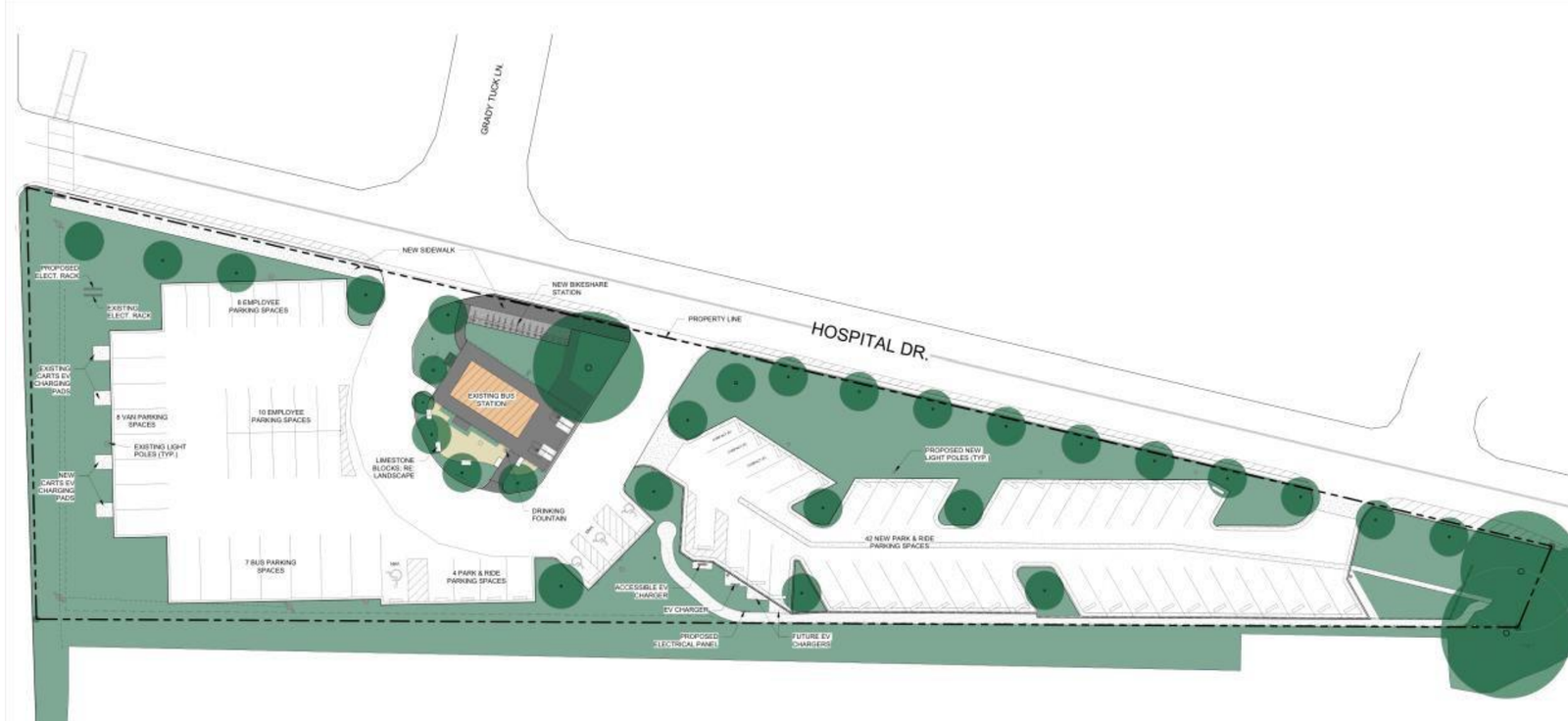
The drawing also labels a new bike-share station, a proposed electrical panel and EV charging areas. Importantly, it separately identifies space for future chargers. Those future provisions do not establish that every charger will arrive in the initial construction phase.
Together, the proposed improvements would offer more ways to reach a bus connection. The parking spaces and charging facilities remain planned additions; the drawing does not establish that they are available for use.
A Bastrop Connection Dating Back to 1979
CARTS traces its founding to 1978, according to its official agency history. Its early purpose centered on improving transportation across rural Central Texas, and Bastrop played a part in that organizational beginning.
The February 8, 1979, edition of The Bastrop County Times reported that CARTS held its first board meeting in Bastrop on January 19. Directors elected Travis County Commissioner Richard Moya chairman and addressed the new organization’s bylaws and implementation.
The report described plans to add vehicles and equipment for rural transportation services. It establishes an early CARTS connection to Bastrop, but it does not date the opening of the current station.
Connecting Bastrop With the Austin Region
Today, CARTS’ Bastrop service listings include several distinct ways to travel. Interurban Coach provides scheduled regional connections, while Country Bus offers reservation-based transportation. CARTS Now provides on-demand rides within its designated service area.
Each service has its own coverage and operating arrangements. Riders should check the agency’s current information for their trip rather than assume every service reaches the same addresses.
CARTS launched new weekday commuter service linking Smithville and Bastrop with downtown Austin on March 2, 2026. The agency describes its commuter expansion as part of the Climate Pollution Reduction Grant program, connecting regional travel with efforts to reduce emissions.
That service gives the CARTS Bastrop Station expansion a practical role: additional parking could help residents combine a drive from home with a bus trip into Austin. Bicycle facilities could offer another connection at the beginning or end of a journey.
A Proposed 15-Bike Network for Bastrop
A related proposal would link the station and Bastrop Public Library through a small electric-bicycle network. On July 14, 2026, the City Council adopted Resolution R-2026-100, authorizing participation in the CARTS mobility-hub proposal with conditions.
The attached plan calls for 15 e-bikes and three five-dock pods: two at the station and one at the library. Eight bikes would normally sit at the station, with two held for rotation or backup. The library would receive five.
The proposal aims to connect transit with downtown destinations and the library’s access to Fisherman’s Park and nearby trails. It coordinates the station hub with the park-and-ride expansion, while also proposing improvements at the separate library site.
Council approval does not establish that the bikes have arrived or that the network is operating. The resolution requires any necessary local-match appropriations to return for final council review. Procurement, operating arrangements and implementation still matter before launch.
Building on Earlier Transportation Priorities
The station plans echo themes in Bastrop’s 2016 comprehensive-plan transportation chapter. That document called for stronger commuter connections toward Austin, park-and-ride facilities and better links between bus stops, sidewalks and bicycle routes.
Those earlier goals provide planning context. They did not specifically authorize or fund the current $1.47 million registration.
Elsewhere in the region, CARTS’ procurement opportunities also include a vanpool pilot and Lockhart Station planning and design. Those are separate initiatives, rather than components of the Bastrop construction scope.
What Happens Next at CARTS Bastrop Station?
CARTS has advanced the expansion into construction procurement. Its request for proposals, RFP-2027-146-Bastrop, states that documents became available September 29, 2026. The complete construction-document portal requires registration; those restricted drawing sheets were not available for this review.
The public solicitation confirms a bidding process, not a contractor selection or contract award. Likewise, the January 2, 2027, start and August 30, 2027, completion remain estimates, not confirmed construction milestones.
For Bastrop, the proposed work brings parking, charging, walking and bicycle connections together around an existing transit stop. Its value will come from how those improvements support everyday trips as the plans move toward construction.