
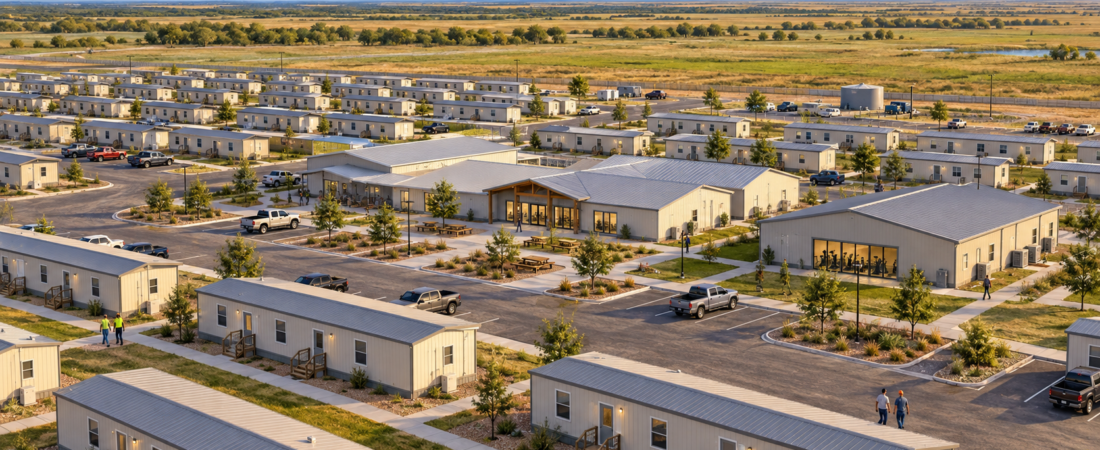
A major construction project needs more than equipment and materials. It needs somewhere for the people building it to sleep, eat and recharge. Project Drover, listed in state records as Red River Rise Lodge, would address that need with a temporary workforce camp near Vernon.
The construction registration identifies 6100 County Road 111 S in Wilbarger County, a $160 million estimated cost and 62,207 square feet. It lists September 17 through October 17, 2026, as the anticipated work period. Those figures do not establish the full camp’s opening schedule.
Project Drover plans space for thousands of workers
A separate TCEQ wastewater application describes a camp serving approximately 4,500 people. Planned facilities include dwelling trailers, laundromats, gyms, dining areas, guest services, mixed-use buildings and rental spaces. That population is an infrastructure planning figure, not a confirmed arrival count.
Together, those uses describe a place organized around life between shifts. Meals, laundry and a workout would be part of the same campus as the accommodations. The proposal is for temporary workforce lodging; it does not establish a conventional apartment community available for general leasing.
A short commute is part of the plan
A site-selection presentation in the application identifies approximately 272.57 acres near Oklaunion, outside municipal boundaries. Its map connects Drover to a construction site labeled RSE, about 4.6 miles and seven minutes away. The presentation positions the property as a workforce hub for nearby construction.
For workers putting in long shifts, the distance between a bed and a jobsite matters. A short commute can leave more of the day for rest and personal time. Here, proximity is an explicit part of the site-selection case.
The broader county is also seeing data-center investment. Google announced in February 2026 that a new Wilbarger County data center was under construction, alongside clean power developed by AES. Google says its facility will use air cooling to limit water consumption to critical campus operations such as kitchens.
The reviewed Drover materials do not identify Google as the housing customer or spell out RSE. A direct contractual connection between the two projects has not been established.
Project Drover includes its own wastewater infrastructure
The wastewater application proposes treatment capacity of 405,000 gallons per day. Its map shows the property, proposed treatment plant, an 11.9-acre detention pond and a discharge route toward Dugan Creek. This is proposed infrastructure, not evidence of an issued wastewater permit.
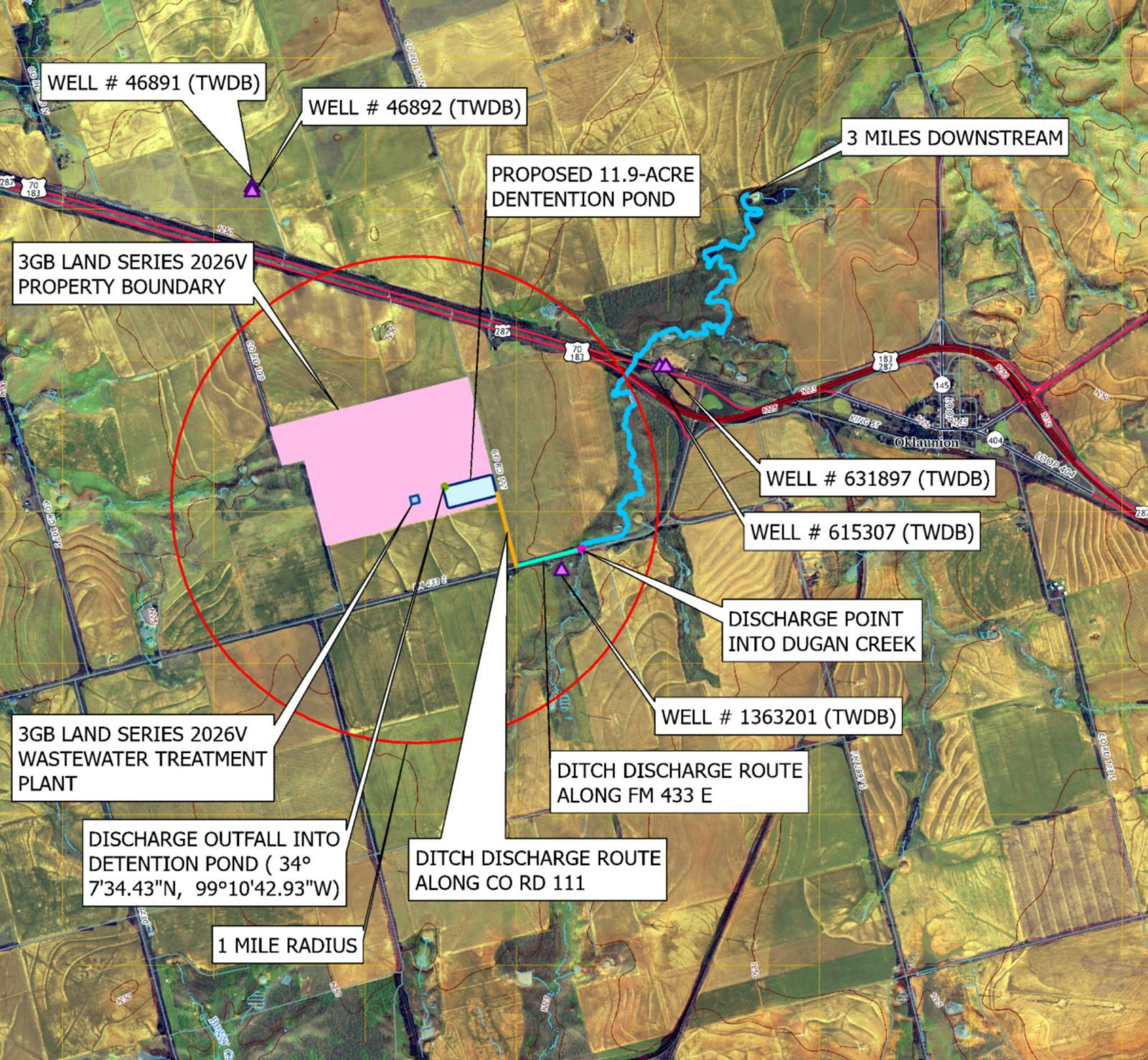
The utility plans illustrate how much lies behind a workforce camp. Accommodations are only one piece; everyday services also require roads, drainage and systems sized to support the people staying there.
Who is behind the proposal?
The TDLR registration names 3GB Land Series 2026V as owner and Kimley-Horn as the design firm. The environmental application also contains a site-selection presentation from PJW Consultants.
PJW Consultants lists temporary workforce housing, development advisory, infrastructure and site development among its services. Its involvement in the materials does not establish who will handle day-to-day lodge operations.
The Project Drover construction filing provides a new milestone, but its one-month schedule and reported building area have not been reconciled with the broader campus described in the environmental records. A confirmed opening date and final occupancy schedule remain unavailable.
What the plans do establish is the scale of the ambition: housing and daily services for a substantial temporary workforce near Vernon. Behind the region’s construction activity is another building challenge—creating a place for those workers to live while the work gets done.