
Greenville Economic Snapshot
Selected U.S. Census Bureau indicators for Greenville city.
Source: U.S. Census Bureau QuickFacts.
Greenville Texas Construction: Historic Downtown, Aerospace and I-30 Growth
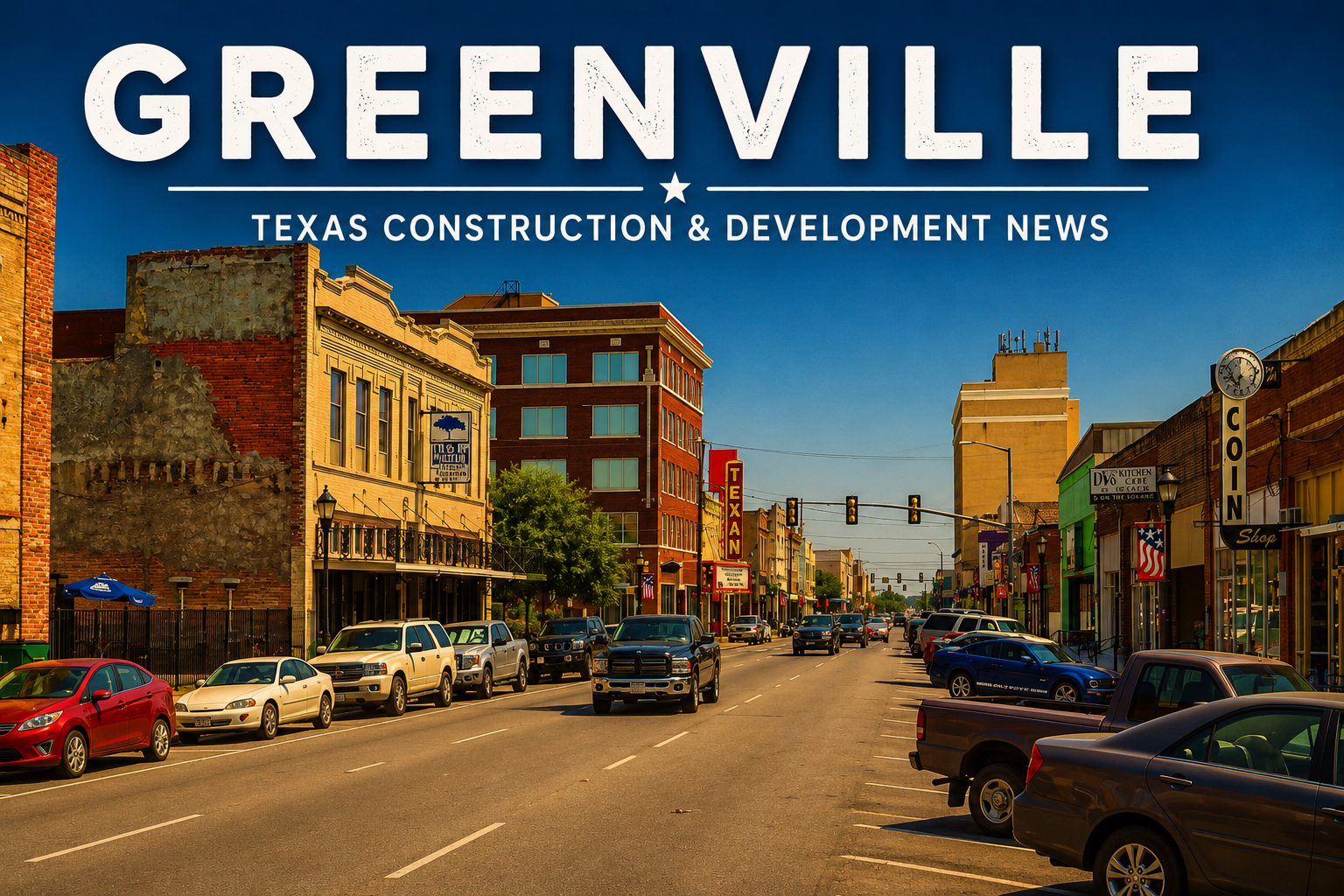
Greenville’s downtown retains the architectural footprint of a Hunt County trading center that grew with the railroad and the cotton economy. Around Lee Street, Washington Street and the historic courthouse district, older storefronts offer opportunities for independent businesses, restaurants and upper-floor reuse. The city’s comprehensive plan treats downtown as a distinct neighborhood and economic asset, calling for reinvestment that supports pedestrian activity rather than simply replicating highway retail. Projects here must respond to existing buildings, parking, sidewalks and historic streetscapes, making the rehabilitation of a modest commercial property as locally meaningful as a much larger development on the city’s outskirts.
Aerospace and defense work give Greenville an industrial profile unlike that of many communities northeast of Dallas. L3Harris operates a major aircraft modification and mission-systems complex at Majors Field, where specialized hangars, secure facilities and technical employment shape the surrounding economy. The city’s comprehensive plan specifically identifies the airport and L3Harris as anchors for additional aviation-related investment. Hunt Regional Medical Center provides a separate institutional base, supporting medical facilities and professional services. A secure aviation facility, a hospital improvement and a downtown restaurant each involve different building requirements, workforces and effects on the local economy.
Interstate 30 is Greenville’s principal connection to the Dallas–Fort Worth region, with the US 69, US 380 and Wesley Street corridors carrying retail, freight and commuter traffic across town. The city’s planning documents identify the interstate corridor, downtown, Majors Field and healthcare institutions as complementary areas for growth, while its Wesley Street study and West Greenville plan examine access and future land uses in more detail. New commercial pads and distribution properties must be evaluated alongside the roads, drainage systems and utilities needed to support them. The city also maintains an I-30 overlay district, making site design and corridor appearance part of the development review process.
Greenville’s recent population growth adds pressure to an economy already shaped by aerospace, healthcare and its role as a regional shopping center. New housing can increase demand for schools and daily services, while an industrial expansion at Majors Field may have little resemblance to a downtown restoration or a restaurant on Wesley Street. Texas Construction Media investigates the specific site, developer, operator and public records behind each proposal, distinguishing long-range plans and permit filings from active construction and confirmed openings. The goal is to explain how investment affects Greenville’s established neighborhoods and employment corridors, not simply count construction registrations.
Latest Greenville Project
-

Nothing Bundt Cakes Bringing Something Sweet to Greenville
Nothing Bundt Cakes is preparing its first Greenville bakery along I-30, joining a growing commercial area bringing new dining and entertainment options to the…

Greenville at a Glance
♟ Economic Development & Incentives
Greenville-area economic development resources ↗
▥ Planning & development
City planning resources ↗
⌂ Building inspections
Permits and inspections ↗
↗ Regional coverage
Royse CityTerrellRockwallForneyFatePrinceton
Statewide coverage
Explore All Texas Cities →
Latest Greenville Texas Construction News
Community Construction Gallery
See construction taking shape in Greenville? Share a photo or project tip with Texas Construction Media. Submissions are reviewed before publication.