
The US 83 corridor study puts a familiar road through rural Texas at the center of a much larger conversation: how to keep local trips, freight and growing travel demands moving together. From Carrizo Springs to the Oklahoma line, residents have until December 19, 2026, to identify the places where the highway needs attention.
The Texas Department of Transportation (TxDOT) is gathering those observations through its public survey. The study will help shape a long-range improvement plan, with completion expected in late 2027.
That date marks the end of this planning effort. TxDOT has not announced a corridor-wide construction budget or start date through the study.
A 606-mile look at a working Texas highway
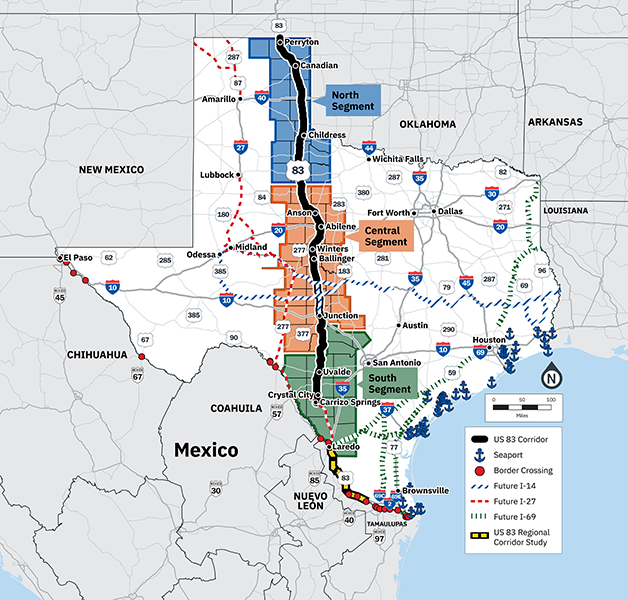
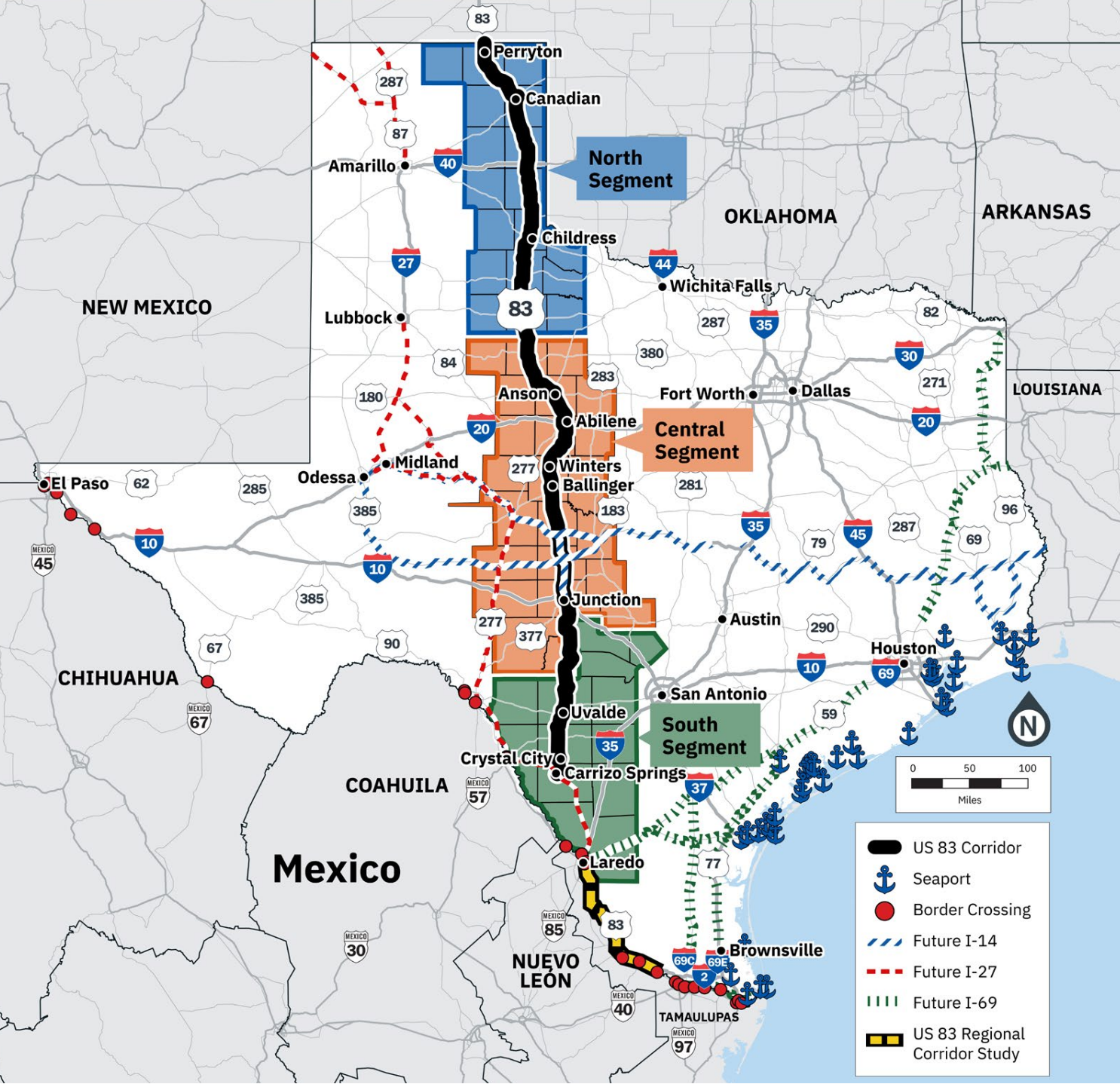
The US 83 Texas Corridor Study covers about 606 miles through 22 counties and 23 cities. Its reach crosses six transportation districts, linking rural communities with larger regional destinations.
The route ties together places with very different daily needs. TxDOT’s corridor map traces communities including Uvalde, Junction, Ballinger, Childress, Canadian and Perryton. A highway used for a school or medical trip also carries goods across a much longer regional network.
That overlap makes road condition, connections and safety part of the same discussion. The review will consider economic resilience, environmental and community concerns, and ways to accommodate different forms of travel.
The work builds on an earlier US 83 regional study completed in 2023. This round organizes stakeholders into northern, central and southern working groups. Local governments, railroads, airports and private-sector representatives can help explain how the road serves their communities and operations.
Those groups will help identify needs, compare strategies and develop priorities. This is a chance to shape the choices before individual improvements advance through later development stages.
More freight on a road that also serves everyday life
TxDOT’s April 2026 fact sheet projects freight tonnage to rise from 89 million tons in 2023 to 109 million tons in 2050, a 23% increase. It projects freight value to grow faster, climbing 54% from $85 billion to $131 billion over that period.
For businesses that depend on deliveries, those projections give the study an economic purpose alongside its transportation goals. The question is how future freight demand will fit with the access and travel needs of the communities along the route.
There is also an important difference between the route and its wider study area. US 83 passes through 22 counties in this review, while the fact sheet identifies a broader 53-county study area. Its regional figures include 1.1 million residents and $59.9 billion in gross state product in 2023. Those totals describe the broader area, not just the towns directly on the highway.
A chance to point to the exact problem
The official survey and interactive map give road users a way to identify specific locations. Participants can place multiple markers, then describe the issue at each spot.
Available categories include traffic, safety, maintenance, road conditions, connections and bicycle or pedestrian concerns. The map also lets users view other comments and filter them by category.
A useful comment can name the location, describe when a problem occurs and explain who it affects. A troublesome crossing or a recurring bottleneck gives planners something specific to investigate. These are examples of observations residents can submit; TxDOT has not selected those improvements.
TxDOT says feedback will help it understand travel patterns and access to jobs, schools, healthcare and other destinations. Comments are due Saturday, December 19, 2026.
Where the interstate question fits
US 83 also appears in a separate, much larger transportation effort: the I-27 System in Texas. That future interstate network includes portions of US 83 alongside several other highways.
However, this corridor study is not an announcement that all 606 miles will become an interstate. TxDOT describes I-27 development as a decades-long effort involving incremental upgrades to existing roads.
Sections must meet interstate standards before TxDOT seeks the necessary federal and national highway approvals. That distinction matters when following Texas infrastructure projects: a planning study, a funded project and a road under construction represent different stages.
For US 83 users, the immediate opportunity is to put everyday experience into the record. The next milestone to watch is the study’s recommended priorities and implementation plan in late 2027. Those findings should make the choices ahead clearer.